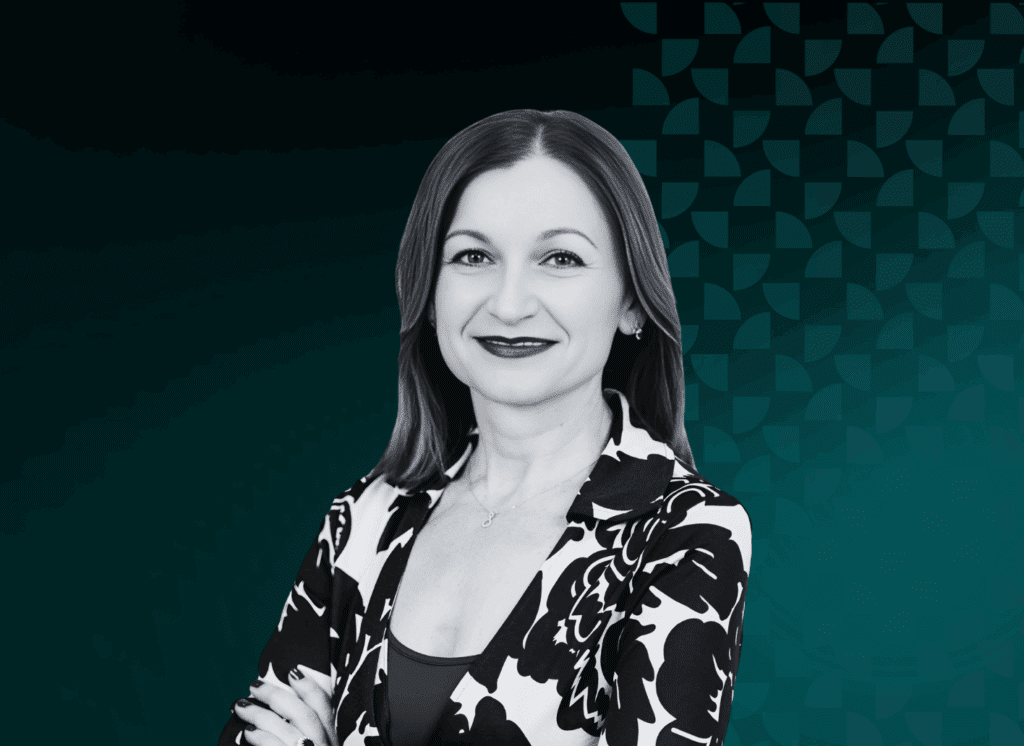
EDGEtalk Podcast #5:
in conversation with
Armelle Saint Raymond
(Tag Heuer)

In this episode of EDGEtalk, Aniela Unguresan speaks with Armelle Saint Raymond, Chief Human Resources Officer at TAG Heuer, about how inclusive leadership drives innovation, performance, and lasting cultural transformation.


With 30 years of HR experience across consumer industries, Armelle shares why she frames diversity not as a moral duty, but as a business imperative. She explains how TAG Heuer is building a workforce that mirrors its global customers—and why patience and humility are essential to changing a culture.


Also read the full story: The Time for Change: Why TAG Heuer Believes Diversity Is a Business Imperative

In this conversation, you will learn:

  • Why inclusive leadership is the key to better decision-making and innovation
  • How TAG Heuer uses real-life microaggression training to empower allies
  • Why your internal organisation must reflect the diversity of your customers
  • What it takes to drive cultural change: “Start small and be patient”

Transcript

On personal values and role models

Aniela Unguresan: Armelle Saint Raymond, you are the Chief Human Resources Officer at Tag Heuer. You have 30 years of HR experience in consumer industries, including a big part of those years in senior HR roles within family control businesses. You have supported the transformation of traditional businesses into innovative ones driving organizational transformation, cultural evolutions, one of the cultural evolutions being the one of building inclusive and diverse workplaces. In your bio, you generously talk about the important women in your life, who inspired your choices and shaped your professional identity. Could you please tell us how your personal values and role models influenced your career choices and career path?

Armelle Saint Raymond: Okay. It’s a very interesting question. Well, first of all, my mother used to be a teacher for people who cannot hear. It was my first initiation to the world of handicap. It opened a window on this non-valid word, and maybe gave me my first lesson of tolerance. Also, in my personal choice, I married a man who didn’t have the same religion as mine, who was born in Morocco. We had a different culture, different religion, and we had two children; we educated them in both religions. I have a Christian background, and this double religion gave them the opportunity to see the plurality of the world. Maybe the last thing that really structured my values and personal choices: my daughter is lesbian. She’s super feminist. And she’s a musician. And feminism and equality are really her battle, and she’s super committed. It’s also a way for me to understand better different orientations and the question of discrimination and minorities. All my family around me taught me how to be a better person, more open, more tolerant, and more open to diversity.

Aniela Unguresan: And thank you so much for sharing that. I’m so grateful for you being so open about how our personal lives are important for our professional lives, because we do tend to look at that relationship the other way. We bring our profession into our personal lives and take that for granted. But when it comes to the other very important influence we very often shy away from it. Business is personal, business is emotional. We just like to tell ourselves the story that’s not the case.

Armelle Saint Raymond: We’re human first. And I’m the kind of person that trusts that personal experience and personal values have a strong impact on professional choices, and not the opposite, because I bring the person I am in my job; I can’t do it differently. For me it was just obvious to consider diversity, equity, and inclusion as a main priority for TAG Heuer. Building an inclusive culture was the most important thing I had to do.

Why diversity is a performance issue

Aniela Unguresan: And because you are talking about your commitment, your ambition, your accountability to contribute to making workplaces and TAG Heuer’s workplace more fair, more diverse, more inclusive, could you please share with us why do you think that diversity, fairness, and inclusion are important in today’s world. Of course, I think that maybe one year ago this question would have been such a superfluous question to ask, but here we are in 2025, it appears that this question still deserves to be asked and answered repeatedly. So why do you think it’s important?

Armelle Saint Raymond: Well, there have been a lot of studies that demonstrate in a very scientific way that inclusive environments are more keen to bring innovation, creativity—that when you put around the table different brands that think differently, that have a different vision of the world it’s much more creative. So I strongly believe that diversity and inclusion bring more creativity. But I’m also pretty sure that if you have diverse people taking decisions around the table, it’s also the best way to take good decisions. The final objective is to bring more performance. So, um, it’s not only a moral perspective, it’s not only because it’s a duty or a moral aspect, but it brings more performance to our economical world. So this is where I stand. I don’t bring, uh, DE&I as a moral requirement or as duties. It’s not a question of morality, it’s a question of performance, at the end of the day. This is also the best way to be heard by our leaders. If you talk about performance, they’re more ready to listen than if you talk about moral or duties. The thing is that especially the young generation, but not only, they’re more keen to join a company that has an inclusive culture. So in terms of employer branding and how to attract the best talent, being an inclusive company and being the champion of diversity, equity, and inclusion is also a way to attract the best people. So again, we’re talking about performance and it’s most of the time my best argument in front of CEOs.

Engaging leaders and employees

Aniela Unguresan: And I think that, you know, when we talk about performance, we actually create this alliance between values and economic value creation. Because people with disabilities or women in the workplace are used to being seen as economic drains rather than drivers of growth and opportunities. I think standing behind that competitiveness case is very important. And you mentioned briefly that the leaders of your organizations, of course, you are one of the leaders of TAG Heuer at the global level today, but who else are the stakeholder groups that you find in your day-to-day work are the most important, the most instrumental, in making the workplace fair, diverse, and inclusive in TAG Heuer?

Armelle Saint Raymond: First of all, management is key. Not only the top management, of course, they need to be on board, but also the middle management, who have day-to-day interactions with employees. So for me this is a very important target. But the employees themselves are absolutely instrumental. That’s why, for example, we created a champions community in order to promote diversity, equity, and inclusion, but also to raise the hand and say “Hey, we think we have an issue here. Can you help us?” So it’s in both senses. Our partners are not only the top management, but also all the employees themselves, because they are the good people to promote those values.

Aniela Unguresan: Any stakeholder groups that you have experienced as the ones that need a little bit more convincing than others? Internal or external?

Armelle Saint Raymond: Of course, when you talk to business leaders, they have to be convinced that it’ll drive some added value, that it’ll contribute to the performance, to the competitiveness. Of course, you will have to demonstrate that. These are maybe the most difficult to convince because they always oppose diversity, equity, and inclusion and oppose cost reduction, savings, profits, and so on. At the end, for me, it’s not an opposition. You can go in the same direction; it’s just the way which is different. So probably the business leaders are the most difficult to convince. We have someone who is in charge of diversity, equity, and inclusion, and this person has been very useful and helpful for us, in the sense that she also contributed to educate our top management. Because we’re talking about education here. And top management has to be educated like the others.

Training allies through real-life examples

Aniela Unguresan: Armelle, can you share with us when you educate the business leaders, who tend to be the most demanding stakeholder groups, what are the concrete examples that you share with them, to tell them: “because we invested proactively…”

Armelle Saint Raymond: Actually, we design a workshop, one day workshop, for everyone. For the top management, for the middle managers, but also for the employees. We designed this workshop based on concrete examples, situations that did exist within the company. So we ask our employees, “can you bring your testimony of situations where you observed discrimination.” Not big discrimination, but you know, this small daily discrimination that you face. And we collected all these examples and we built a business case on that example.

And the objective was to share with the employees what you could have done if you had been a witness of such a situation. In order to equip them to be in the position of being an ally. So it was really the purpose of this workshop and it was super useful. And the power of this workshop was that we designed it based on real life, because we took examples from the company. Of course it was anonymous. We told them, you know, it’s not a fake example that’s happened in another company, it’s in TAG Heuer. So there was a list of microaggressions, situations of discriminations, and so on. And the idea was to make people aware of what is a microaggression, what is a situation of discrimination, and how I can act. How I can behave in front of such a situation. What can I do? What can I say at my level? And everybody can do something. It was super powerful because it was based on concrete cases.

Mirroring your customers

Aniela Unguresan: So you told us, okay, we worked on this to say when people experienced concerns related to discrimination, how they can correct their behavior. And, about the more proactive side of saying, because we invested in this, we were able to design better products, or we were able to create stronger loyalty among the diverse customers that we have. Could you also say something like that?

Armelle Saint Raymond: Well, it’s true that having a chief product officer who is a female helps a lot to target the female segment. So we have lots of women in the product team, in the product and design team. Of course it’s good for the business because we target the female segment. Today, 15% of our net sales are made with female customers, but we target to have at least 30% of female customers. So, of course, having women in the product team and in the merchandising team helps a lot to understand better in a more intimate way the female customer’s wishes and expectations. So of course it helps, but it’s not only that. Having a diverse profile within HQ helped a lot to understand better our customers who are everywhere in the world because we sell watches in China, in Korea, in Japan, in United States, in Latin America. So having a diversity of profiles within our HQ team, marketing & product, helps to understand in a very intimate way the expectations of our customers who are diverse by essence. So it’s a must. It’s not a nice to have, it’s a must. Because if we have a European-centric vision, we will never address the expectations and wishes of our Chinese or Japanese customers. So it’s also good for business. For me, our internal organization has to be a mirror of our customers. We have women, we have multiplicity of cultures among our customers. We have also people with disabilities. So we need to address all these segments of customers in a better way. And there’s only one way to do it: to have exactly the same people within our team who are designing the watch and making the watch.

Aniela Unguresan: This is excellent, Armelle. Just one follow up question. So you talked about the gender diversity. Is generational diversity, in addition to disability, gender, cultural, and ethnic diversity, something that is important?

Armelle Saint Raymond: Yes, absolutely. Generational diversity is also key. Today we have—our, I would say, hearts of customers are male over 45 and we are targeting women younger. So if we do not change, if we do not bring this diversity within our teams, we will never capture these new segments we are targeting right now.

So it’s important to have different generations at work. Today we have four generations at work: we have people around 25 and we have people above 55, and it’s quite well balanced. Of course, the core is between 30 and 45, but we also have young, very youngest generation and the eldest generation, and I’m part of it. For me, it’s essential to have the reflection of our society within our company. We cannot design and make what is for young people if we do not reflect this category within our employees. The aspirations of the youngest generation, you cannot capture it if you are over 50, it’s not true. We need to have those people in our teams.

The value of external validation

Aniela Unguresan: Fantastic. This is really nice. To round up the conversation, Armelle: why EDGE? What working with the EDGE methodology, undergoing a rigorous independent third party assessment and certification, brought to your journey towards a fair, more diverse, and more inclusive workplace?

Armelle Saint Raymond: First of all, it forced us to answer what is requested by an official label. It provides us some guidance, because there are some aspects that we didn’t take into consideration. It’s very interesting to have the conversation during the audit process with you, because some aspects we never took into consideration. So it’s a way also to broaden our approach. Also, it allows us to measure the progress, because every two years you can measure the progress, and you do not progress if you cannot measure. With EDGE, you have this capacity to measure where we are in terms of action plan, so it’s like having a roadmap and following step by step how we progress. And the last thing is that it’s not possible to pretend by ourselves that we are the champion of diversity, equity, and inclusion. It has to be said by a third party. And you are this third party. It has to be an independent level to say, okay, you are at this level taking into consideration the benchmark of the profession, and so on.

So we are not the best people to tell the rest of the world that we are good at. So we need to also get this credibility on an external level, in order to strengthen our position and to give this credibility outside.

Aniela Unguresan: Top reactions, Armelle, that came out of your work with EDGE that you found useful to add to your roadmap.

Armelle Saint Raymond: Equal pay. It was interesting. So, even though we are not yet certified for equal pay, because it’s scheduled for later on, it allowed us to have the big equation in mind. Like having 30% as a minimum within the management team, or the gap between men and women. It gives us, I would say, all the material and guidelines to be ready for the next certification. This was very useful. But also we revisited some of our programs to ensure that they give opportunity for all. Just give you an example. We have a mentoring program, which is open to a certain portion of the population, certain targets of the population. And, after having discussed with you, we realized that it was not inclusive enough. It was more an exclusive program. So we reviewed it in order to have this program more inclusive than what we initially designed. So that kind of thing was very useful because we revisited our practices, programs, and policies to ensure they’re really a hundred percent inclusive.

Start small and be patient

Aniela Unguresan: Armelle, anything I didn’t ask you that you think would be important to add to the conversation?

Armelle Saint Raymond: No, I think we had a discussion around the most important things. To conclude, it’s very important to be super humble and to accept to implement small things at the beginning, because it’s never a big bang. It takes time. You do not change a culture like that in five minutes. It takes time to install this inclusive culture, so it’s very important to be super patient, and also to be very humble. Sometimes you win very small battles, but it’s okay. Because, at the end, small battles after small battles make a big thing. Start small and be patient. It’s the only way to change a culture.
Book a demo

Do you have questions about our product or pricing?

Simply fill out the form below and one of our colleagues will be in touch shortly.

Book a demo

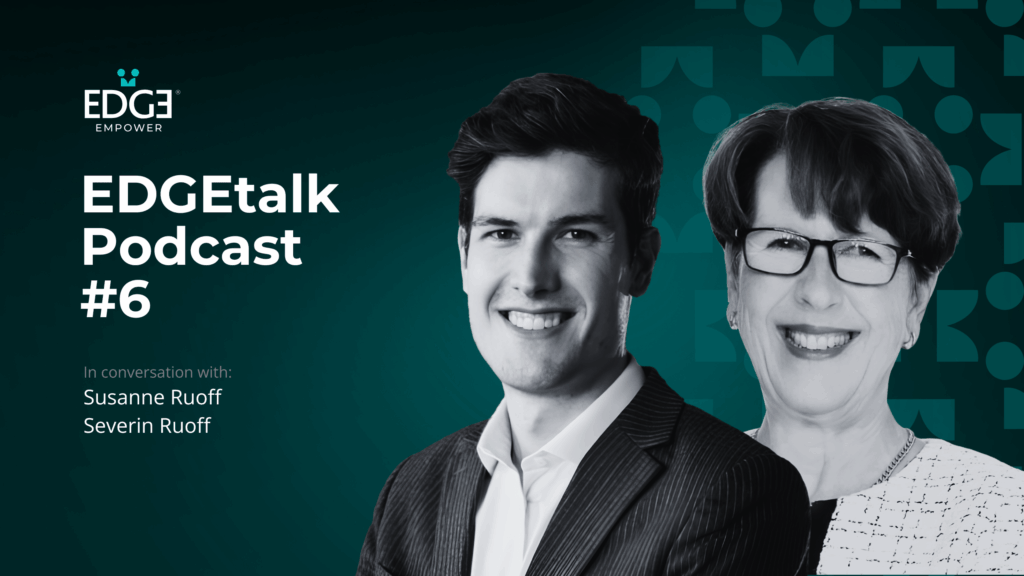
EDGEtalk Podcast #6:
in conversation with
Susanne and Severin Ruoff (Folx Global)

In this episode of EDGEtalk, Aniela Unguresan speaks with Susanne Ruoff and Severin Ruoff, co-founders of Folx Global, about leadership in the age of AI and what it truly requires of the people who practise it. Their central argument: organisations that cannot answer this question clearly will struggle to lead effectively in the years ahead.

Susanne, former CEO of Swiss Post and one of Europe’s most influential business leaders, brings decades of experience guiding organisations through transformative uncertainty. Severin brings a new generation’s perspective and a pioneering approach to AI-powered leadership development. Together, they explore the boundary between what technology can do and what only humans can.

Also read the full story: Human Leadership in the Age of AI: What Technology Can Never Replace

In this conversation, you will learn:

  • What the EU AI governance debate means for HR and DE&I practitioners today
  • Why the right question is not “what can humans still do?” but “what is it that only humans can do?”
  • How AI systems amplify unconscious bias at scale — and what responsible leaders must do about it
  • Why leadership development needs a flight simulator, not another workshop

Transcript

What leadership in the age of AI demands: vision, trust, and guiding through uncertainty

Aniela Unguresan: Hello everybody. I am Aniela Unguresan, I’m the founder of the EDGE Certified Foundation, and I have the pleasure today to host a conversation on leadership; leadership in the age of AI, powered by AI and wisdom, and practice. And, with me today, I have Susanne Ruoff and Severin Ruoff, who will be giving us an insight into the work that they do around leadership and AI.

As a famous line says, my first guest today needs no introduction, especially in Switzerland, as Susanne was for a very long time leading one of the biggest Swiss companies with a lot of success through times of big transformations. She was one of the most powerful, influential figures in the business community in Switzerland and in Europe, and passing the baton from Susanne to Severin, who incarnates the next generation of leaders and entrepreneurs that blend wisdom, and technology, and interesting tools.

Welcome Susanne, welcome Severin.

Severin Ruoff: Thank you.

Susanne Ruoff: Thank you Aniela, and hello and thank you for the nice introduction.

Aniela Unguresan: So, Susanne, I very rarely have the privilege of speaking with accomplished female business leaders such as yourself so, if you allow me, I will start with you and ask you a very simple question. What is leadership for you?

Susanne Ruoff: Yeah, simple questions are not always simple to answer, but I try to do this, Aniela. For me, leadership is really to motivate people through vision, inspiration, and trust to achieve a common goal. It’s creating the conditions in which trust and collaboration can flourish. So it’s more guiding the team, lead to a common goal, and gives direction, meaning, purpose, and also very important today, we see this every day, is guiding through uncertainty.

So that’s, in a short sense, what is leadership for me. Leadership is also decision making. Leaders have to give, as I said, meaning, purpose, guidance in uncertainty, but they also have to take decisions. And I read many books from Daniel Kahneman, he was a Nobel Prize winner in economics, and he reminds us that decisions are vulnerable to bias. And this is exactly what is really also touching me: what we know about biases, how we make decisions, decisions in recruitment, in performance, in business strategy, in everything.

A bias is really a systematic mental shortcut. And this gives me a very important point, because we have more and more people from all backgrounds with us. We have people from different nations, different cultures, different religions, different educations, and how can a leader make the best decisions with all these biases and all these conditions around? And, in my 30 years of management, I saw that, especially when you put a team together, you have the automatic tendency to feel drawn to employees who are similar to you. And here it starts, because they communicate the same, you feel comfortable with them. But here we have a risk. We have to be very aware about what kind of people we have in our team, and how is then a decision made through all these different things. So that’s very important. Biases, making decisions, and last but not least, change management. As a leader today, you have constantly changes, and you just mentioned before the digital transformation of the Swiss Post, it’s very much not exactly knowing where the digital is at the end, but knowing that we go through an uncertainty, through a learning, a change. And my personal experience out of this is you have to involve all the different parties, this diverse team, to make it to a good decision and come to a good learning for everybody because we know all: letters disappear, money will be done by digital banking, everything is different. So you have to be close to the people, close to the employees, to the customers. And this is where the third part, the change management for leader is.

So in a summary, it’s really guiding through uncertainty; give directions as good you can; have a good ability to make a decision with a diverse team; leading, guiding through the change; and be very close with the humans.

The compass and the GPS: the limits of AI in leadership decision-making

Aniela Unguresan: And Susanne, in all these elements that you have very nicely summarized now, how much of this you think that it’s inherently human and how much of it do you think can be technology-driven and ultimately technology-led?

Susanne Ruoff: Yeah. Good thing. Imagine we have two leaders. One leader, who has built his or her career in a world where information was power, it was experience that counts everything like this. The other leader steps into the age of AI leadership. In this world, AI can analyze millions of data points in seconds. You don’t have to analyze everything. You need to trust or not, that’s the other thing, but this is a different leadership. And when you ask me how leadership is, in the time of AI, different, I think it’s what we see in our work every day, it provides very fast answers, but it doesn’t provide the meaning and the reassurance, ethical adjustment, human confidence, or trust. That’s what we have to figure out, that’s what we have to do as a human.

Aniela Unguresan: So if I hear you well, this sense of direction, the compass. This is something that you believe is and will remain inherently human, and navigating to implement this vision, navigating to go into the sense of direction, the GPS, this is something that can be led by technology and AI sometimes in better, more effective ways.

Susanne Ruoff: Yes, you are right, this is a good summary, but it still stays this ambiguity. In case of an ambiguity, AI can give you different solutions, or different insights, or data points, but the conflict and the doing is still with the human. For example, you have a conflict in your team, and nobody takes this with words. It’s just like a rosa elephant around. You can analyze it with AI, all the different points, but at the end it’s the human who has to solve the conflict, you can’t give this to AI. They can give you probably some inputs, but it returns to the leader, to the people, and this is just one ambiguity and conflict, but there are many others. So this leadership is different, and it has a lot to do with the personality of the leader. AI can give you inputs, the technology is here. I’m sure everybody uses a lot of Perplexity, Copilot, Gemini, and others. It is very important to use it, to be efficient and make the data points, but then it still requires human judgment, verification, critical thinking.

Even ChatGPT, Gemini, or whatever say “I’m not a hundred percent sure, this could be a wrong answer, please think about it.” So it’s still, our thinking is needed, that’s very important.

So I think in the age of AI, the question is not “what humans can still do.”

The question is “what is it that only humans can do.”

Are organisations ready to develop AI-era inclusive leaders?

Aniela Unguresan: And Susanne, do you think that we are prepared today to create the generation of leaders that will have this profile, that will be able to use technology wisely in an unbiased way while putting to use their moral compass, their capacity to be giving that sense of direction, to mediate, to create that collaboration and trust. Do you think that we have today what is needed to create this generation of leaders?

Susanne Ruoff: So, are we prepared? What I see with our work, when we go to companies, when we talk, when I coach, I see there is a huge gap. There are people, they are very technology-oriented: they use all these tools, they see what could be the tendency in 1, 2, 3 years, they see how fast this is developing. When we look back, how fast was the first AI tool all over the world… But is the human capable, and is every company capable, to take this very fast? So I see from my board work, in all boards we did days and workshops: what can we do? What does it mean AI for the company? What does it mean for the leaders? What does it mean for training? What does it mean for projects? And, in all companies, we made pilots: we started with small things and then people learned you have to integrate the people. But when I say how fast it’ll come, we are always a little bit behind. If I look in schools, there are teachers really on the top: they like to do it, they are also interested in these tools, but I would say the most part of the teachers are not ready now. And the question is, should I forbid an AI tool or should I integrate? And I think we need to learn to integrate and to be curious what these tools can do.

Back to your question. I think we are still very much in a learning curve and it’s very diverse. There are companies that do it, there are others.

Aniela Unguresan: And this allows us to get to the heart of the work that you are doing with companies, because that’s exactly where you intervene to make this change happen. So Severin, tell us more.

Leadership development in the age of AI: why a flight simulator beats a workshop

Severin Ruoff: Thanks a lot, we were talking now about leadership in general and, of course, this is a very broad topic, so let me take you back a little bit on where we started a few years ago. So with Folx Global, we actually saw all of what EDGE, of course, is at the center of. This diversity topic and biases that are in the workplace. And we thought, “Well, it’s good we have all of these theories, we know so much, etc,” but very much similar to you we said, “how do we measure it? How do we make it tangible for people?” And that’s where we thought what’s really missing is this practice part, because of course you can do workshops, but workshops are very difficult to scale, etc. And so that’s where we started using technology, and back then it was really virtual reality that we focused on, because we thought this is a great tool for people to actually go into a situation, see how it is, and then have a constructive discussion about this particular case. Since then, we’ve moved a long way: it’s been a few years and we widened the topic again because empathy is in way more situations than just in diversity, equity, and inclusion, and of course is in the entire field of leadership in general.

And so, if today I had to summarize the objective of what we do at Folx Global, is to simulate everyday situations in a way that people can just practice it. And of course those are difficult situations, be it in organizational culture, in interpersonal skills, in team dynamics, etc. A great example I always find is: in 1929, Mr. Link invented the first flight simulator, and I think it’s very interesting because it would give you a real experience and you can actually train for situations in which you would experience a lot of stress because you’re in the air with an airplane, you have to react promptly, and correctly.

This wasn’t existing until now for leadership, but I would say AI really helped us to simulate in such a real way, and answer, a direct answer as well, that we can actually start to have these sorts of simulators for leadership situations. That’s really what we do today. It basically puts people either in the shoes of someone else, but today also in your own shoes but with different pairs of shoes, so you can actually try and see how you react emotionally, how you react with voice, like whatever you say to someone when triggered, for example in a team conflict. So this is really how I try to summarize our work and this approach, of course, helps to get back into tricky situations in the professional every day that was harder before or was more linked to personal situations. So in a workshop, you can do role plays and these sorts of examples, but you feel the pressure from outside: you have your colleagues looking at you, you always have bystanders, you can’t really act as if you were alone. And so you don’t really experience as much with different situations as you would if you’re alone, and I see that this is a real upside with companions now that use AI in the background: you can do it in your own safe space at home, at work if you want, of course, but at home as well and you can just practice. You can do the same situation 10 times that you would live 10 times in an entire career. Here you can do it 10 times in one evening. And through that, really train yourself for the situation when it happens.

How AI-powered leadership simulations work in practice

Aniela Unguresan: And Severin, tell me, how does it work when you start working with an organisation? What are the different steps?

Severin Ruoff: So, first, of course, it’s to understand what is the goal, right? So if we go into a topic of leadership, let’s say with an executive board, or the management of a company, it’s often very soft skills related situations. So companies would say, “we have this new strategy, we would like to implement it,” but of course what you really want is people to live it, not just to know it on paper. And so we analyze with them how can we actually build an experience and that really allows people to experience it, to learn it in the first place, but that organizations do really well and have been doing since so many years. But then the practice part is really where we come in and help them design learnings that give you an opportunity to put it into practice. And so once we’ve identified what we want, of course we need to build it. So then it can be in different ways, it can be guided learnings, this is usually very good for organizations that know exactly where they wanna go, or it can be in the form of an avatar, so we actually train an avatar for that specific situation. So it could be, for example, for a company that does a lot of sales, they want to know how to bring their new strategy into every conversation with the exterior world. Then you could simulate one of these conversations and ask the people in this company to have one of these conversations with that avatar that will challenge them on their new strategy and things like that. So you can really emulate, simulate, certain situations and help people train on how to react on them. And then, of course, comes the rollout, and this is where I think today, with the technologies that we have, we can really scale it very quickly. So you can have a learning that is designed, implemented, and scaled within a few weeks if you put in the effort and want that as an objective, which is very different from before, where it would take so long to actually implement the learning throughout an organization with 10, 20, 30,000 people or more.

Aniela Unguresan: So if I understand you well, Severin, it is a highly tailored approach that starts with understanding exactly what are the needs of the organization, and based on the needs, designing the solution that would meet those expectations, and then rolling it out to those people in the organization that need to benefit from it.

Severin Ruoff: Absolutely, and I would go even a step further. It actually allows you to even continue this cycle once it is in live mode and people are using it. If you get feedback, let’s say on certain things that need to be adapted, it’s very evolutive, so you can actually even make the learning grow together with the people. Maybe if you do it the first time, you don’t have the same need as when you do it the 10th time. So you can actually make sure that it suits every step of this organization’s learning. And that’s something that is possible today, but was very hard to implement in yesterday’s learning.

Which industries are embracing AI-powered learning — and why

Aniela Unguresan: Indeed. I think that this training and continuous feedback loop that makes the solution, and the ones using the solution, better, right? So it’s a self-reinforcing mechanism. Severin, when you look at the companies that you work with and the organizations that you work with today, do you see that there are any particular industries or geographies where there is particular interest and appetite for adopting these solutions? Because, again, interest is one thing, and then doing the critical step that Susanne mentioned to go through the change management process of adopting it and making it a living tool is something else. Do you see industries or geographies today that seem to be more open, more ready, to embrace this kind of solutions?

Severin Ruoff: I’d say our view is quite biased because we are here in Switzerland, so I’m not the right person to judge on the rest of the world. What I do see in terms of industries at least, is that product companies are usually implementing these sorts of technologies since a long time because it helps them improve the processes of building reintegrating feedback they get from the clients. Where I really do see a big change is in the service industry because, for a long time, I believe that especially AI was seen as someone that will take away your job and replace humans, as we were discussing before. But I do see that companies start to see the advantage it can bring them as well. I mean, some cases have become quite notorious of companies even going very far in replacing humans with technology. I do think though, that, as you were discussing before, there are certain tasks that are very human and need to stay human. But we need to learn how to work with AI. And I think this learning is much bigger in a service company. Product companies have been doing this for a very long time, but service companies have a very high appetite today because they see, even if they don’t do it, the employees will start doing it. So, in any case, it has to be dealt with because it’s so evolved, at this stage.

AI bias and responsible governance: what the EU debate means for HR and DE&I leaders

Aniela Unguresan: And Severin, you know, in hearing you talk about the service companies, I was thinking, is there any company today in the world that is not a service company? I think that’s one of the interesting evolutions that we have seen. And, Susanne, coming back to you because, I think, that there are some very interesting evolutions, around the use of AI, the responsible use of AI. You mentioned, and I very much like your definition of the bias in calling it the mental shortcut because I think that there is always a strong emotional reaction. The moment we say bias, you know, everybody out there shoots up and says, no, not me. No, you must be talking about somebody else. Yes. So I very much like your beautiful definition of biases being a mental shortcut. And of course the European Union has been making quite a lot of efforts to make the responsible use of the AI a governance issue to ensure that bias is kept out of some critical areas and employment was identified as one of those critical areas that data accuracy is such that it allows a more and more responsible use, and less and less biased use, of these models.

Do you think that in the geopolitical context that we have today, the European Union will have any chance of upholding these regulations for the use of the AI? Because, of course, there is a lot of pressure from a certain number of companies to lower those responsibilities and those standards. What would be your view on where you would like things to go and where things are probably likely to go?

Susanne Ruoff: Yeah, yeah. It’s a huge debate. The European Union stands always for more regulation than all over the world. It’s really in Europe, and sometimes it’s also criticism, too much regulation in banking or whatever but I think in human, we should be very clear on this, because we exclude. And if we see, for example, certain tools: they make a preselection of candidates applying for a job. So it’s so important that it’s really bias-free, even if you cannot make it a hundred percent, but really control this.

But if I look, there are two groups. One who will lower all these things because they are happy now, “ah, finish with this woke” and all these things, because the pendulum was probably too much on one side, and the others, I hope so, they have already implemented and they see the advantage of diversity. When they make a decision, they open it and they include all these different views and opinions. And I think that these companies, like you have a lot of experience with EDGE, have for a long time already implemented, for example for diversity, certain rules and regulations. They don’t have to wait until European Union comes: normally, regulations in politics come later. They do it already, they see the benefit. But, it’s right, there are companies, they will see a release of all these hurdles and they will go the other way. And then it’s important that the employees, and especially the young generation, also stand up and say, we want to work in a company that considers all these different things as human and help us to develop and not discriminate against us.

Aniela Unguresan: And, Susanne, I think that you mentioned something that is very important: this kind of change is inevitable. You can either stay prepared, be ahead of the curve, do the right things, train, be aware, implement, reassure, get people on board, ahead of the moment where you have no choice.

Susanne Ruoff: And it’s at the end also a question of trust in the leadership where you are working. And I see more and more, also young people, they say, “I want to be in a company that I can have trust.” They look about all these good factors they need for having a good working environment, and hopefully also the tools that correct these things will come more and more, and especially when we talk about these different factors to control also how we formulate things. It’s so important because visibility is a very important factor. I’m really angry when I see it in an AI tool, a bias about, just a gender or nationality or colour. This is not the correct way. This is just a small example, but it goes in the big one as well.

More time to be human: what the future of leadership looks like

Aniela Unguresan: So we can only invite all our listeners to check your website. You will find a link to the relevant materials presenting the solution in more detail to stay ahead of the curve and make sure that you can combine the best of human wisdom with the speed and depth of the technology to ensure a sustainable success of your businesses. Anything else that we didn’t cover that you would like to address?

Susanne Ruoff: I would encourage everybody to look what technology is going forward, analyze what’s the good, what’s the challenging thing, be on this curve, as you just mentioned, Aniela, and also be critical. Look about how you could lead even in these critical areas, the company, the people. Be aware and be on this top of the technology. Look what it is and go forward with this.

Aniela Unguresan: Thank you and, Severin, you are a representative of that generation that we hope will wave high the value and ethical standards flag.

Severin Ruoff: So, I believe we have to know each other’s capabilities and strengths, and that for all of the team members, including the technologies, such as agents and robots, and in my opinion only then we will be able to truly adapt and get the most out of every one of these team members, whether they’re human or not. And, one thought I wish to leave with, is that the more you test and play with technology such as AI, the more versatile you become as a leader, and you’ll be able to see where actually AI can really be a benefit and where, maybe, less. And as a cherry on the cake, I believe that if AI takes some of our repetitive work, there is more time to be human again and to do that stuff where we truly excel at.

Aniela Unguresan: Well, with these words, I would like to thank you both for this very insightful and rich conversation. Thank you very much.

Susanne Ruoff: Thank you, Aniela.

Book a demo

Do you have questions about our product or pricing?

Simply fill out the form below and one of our colleagues will be in touch shortly.

Book a demo